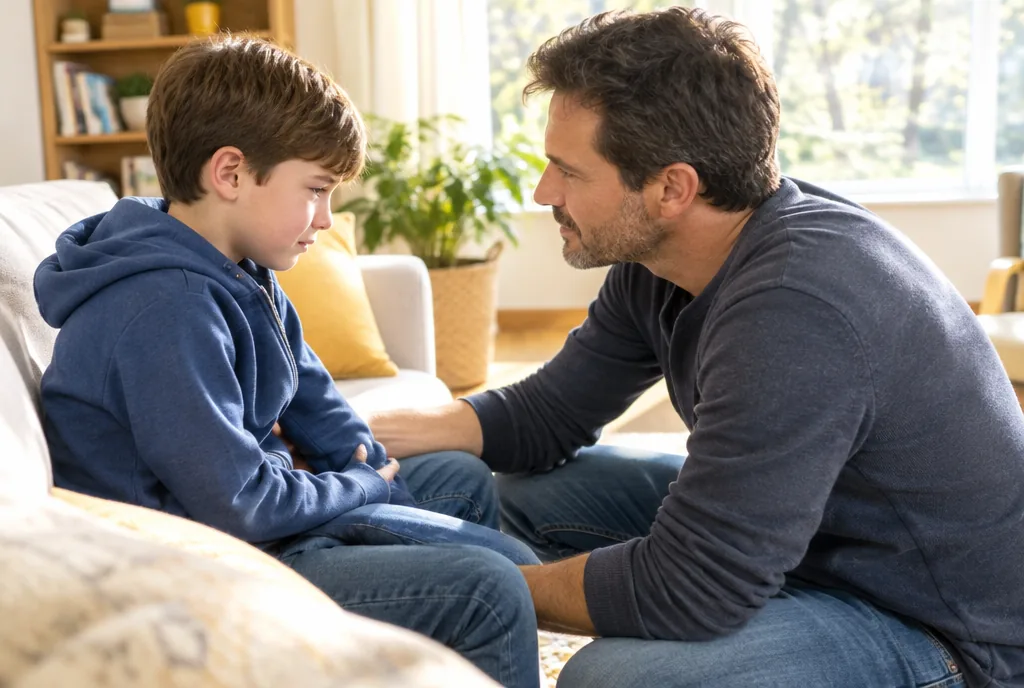
Children with emotional and behavioral problems are rarely “bad on purpose.” Whether the underlying issue is ADHD, anxiety, depression, autism or oppositional behavior, behavioral therapies teach children and parents new skills step by step. They are among the best-studied treatments in child mental health. This overview explains the principles, the named programs with the strongest evidence, and how to find a qualified therapist. It is general information and does not replace an evaluation by a pediatrician or mental health professional.
Key points
- Behavior therapy uses the ABC model: antecedent, behavior, consequence to change children’s observable behaviors.
- Core tools include praise, rewards, clear rules, planned ignoring, and brief time-outs.
- Parent training is first-line for young children, recommended before medication for preschool ADHD by AAP and CDC.
- Evidence-based programs include PCIT, Triple P, Incredible Years, and Helping the Noncompliant Child.
- In schools, teachers should use clear expectations, routines, consistent praise, and predictable consequences.
The principles behind behavior therapy
Behavior therapy focuses on specific, observable behaviors and on what happens right before and right after them. Therapists often call this the ABC model:
- Antecedent: what happens before the behavior (a demand, a transition, a sibling taking a toy).
- Behavior: what the child actually does (yells, hits, refuses).
- Consequence: what follows (attention, the demand is dropped, a reward, a time-out).
Changing the antecedents and the consequences changes the behavior over time. The core tools are:
- Specific praise for wanted behavior: “You put your shoes on the first time I asked. Great listening.”
- Rewards, such as sticker charts or points that add up to a privilege.
- Clear, consistent rules that every caregiver enforces the same way.
- Planned ignoring of minor, attention-seeking misbehavior such as whining, while staying alert to safety.
- Time-out as a brief, calm break from attention, typically about one minute per year of age, followed by a return to the task and to praise.
Parent training: first-line for young children
Much of behavioral therapy for young children works through the parents. In “parent training in behavior management,” a therapist teaches caregivers to give clear instructions, use praise and rewards systematically, and respond calmly and predictably to misbehavior. Sessions include practice, coaching and homework.
For preschool children aged 4 to 5 with ADHD, the American Academy of Pediatrics’ 2019 clinical practice guideline recommends parent training as the first treatment, before medication. The CDC likewise recommends parent training for children with ADHD under age 6. For school-age children, behavioral treatment is recommended alongside medication. Parent training is also a core treatment for oppositional defiant disorder and conduct problems.
Evidence-based programs
| Program | Typical ages | Format |
|---|---|---|
| Parent-Child Interaction Therapy (PCIT) | About 2 to 7 | Parent and child together; therapist coaches the parent live, often through an earpiece from behind a one-way mirror or via telehealth |
| Triple P (Positive Parenting Program) | Infancy to teens, depending on level | Tiered: brief advice, seminars, groups, individual and online versions |
| Incredible Years | Mainly preschool and early school age | Parent groups, with child and teacher programs |
| Helping the Noncompliant Child | About 3 to 8 | Individual parent training focused on compliance |
PCIT is worth a closer look. It has two phases: first parents learn “child-directed interaction,” a daily five-minute play time with praise and no commands; then “parent-directed interaction,” where they practice clear commands and consistent follow-through. Treatment usually ends when the parent reaches set skill levels, not after a fixed number of sessions.
Behavior therapy at school
The same principles work in the classroom: clear expectations, routines, praise and predictable consequences. A popular tool is the daily report card. The teacher rates two to four specific goals each day (“completes morning work,” “raises hand before speaking”), the card goes home, and parents give a small reward when the child meets the target. It links home and school and shows progress in black and white. Supports like this can be written into a Section 504 plan or an IEP.
Cognitive behavioral therapy for anxiety and depression
Cognitive behavioral therapy (CBT) adds work on thoughts to the behavioral tools. Children learn how thoughts, feelings and actions influence each other.
- For anxiety, the key ingredient is graded exposure: facing feared situations in small, planned steps, from talking about a dog, to looking at pictures, to standing near a calm dog on a leash. Avoidance shrinks the child’s world; exposure expands it again.
- For depression, behavioral activation means scheduling activities that bring pleasure or a sense of achievement, even before the child feels like doing them, together with skills for solving problems and challenging overly negative thoughts.
A typical course runs about 12 to 20 weekly sessions. Parents are usually involved, especially with younger children, to coach practice at home.
Applied behavior analysis for autistic children
Applied behavior analysis (ABA) breaks skills such as communication, self-care and play into small steps and teaches them with positive reinforcement, measuring progress with data. Programs should be designed and supervised by a Board Certified Behavior Analyst (BCBA). Modern practice is play-based and naturalistic. Parents can look for a provider who sets goals together with the family, respects the child’s preferences and communication style, and does not try to suppress harmless behaviors such as hand-flapping.
Play therapy
Play therapy uses play as the main way for young children to express feelings and practice coping. Research results are mixed and depend on the approach. For specific problems such as disruptive behavior or anxiety, structured treatments such as PCIT and CBT have stronger evidence; play therapy may be part of a broader plan.
Finding a qualified therapist
- Ask the pediatrician for a referral and for screening of related problems.
- Look for licensed professionals: psychologists, licensed clinical social workers (LCSW), licensed professional counselors, or a BCBA for ABA.
- Ask which evidence-based method they use for your child’s problem, how parents are involved, and how progress is measured.
- Check insurance coverage and whether the school district offers services.
In a crisis, such as talk of suicide or risk of harm, call or text 988, the Suicide and Crisis Lifeline, or call 911.
Keeping a behavior diary
Before and during therapy, a simple diary helps everyone see patterns. Note:
- Date and time
- What happened just before (the trigger)
- What the child did, described specifically
- How adults responded and what happened next
After one or two weeks, patterns often become clear: hunger before dinner, transitions away from screens, or a specific class at school.
Frequently Asked Questions
At what age can behavior therapy start?
Parent-focused programs such as PCIT begin around age 2. For older children and teens, the child takes a bigger role in sessions.
Is behavior therapy better than medication for ADHD?
For children under 6, guidelines recommend parent training first. For older children, the combination of behavioral treatment and medication is recommended. The decision belongs with the child’s doctor.
How long until parents see a change?
Many families notice changes within a few weeks of consistent practice, but lasting results depend on keeping routines in place after therapy ends.
Does behavior therapy mean punishing the child?
No. The emphasis is on praise, rewards and teaching new skills. Consequences are brief, calm and predictable, never harsh.